


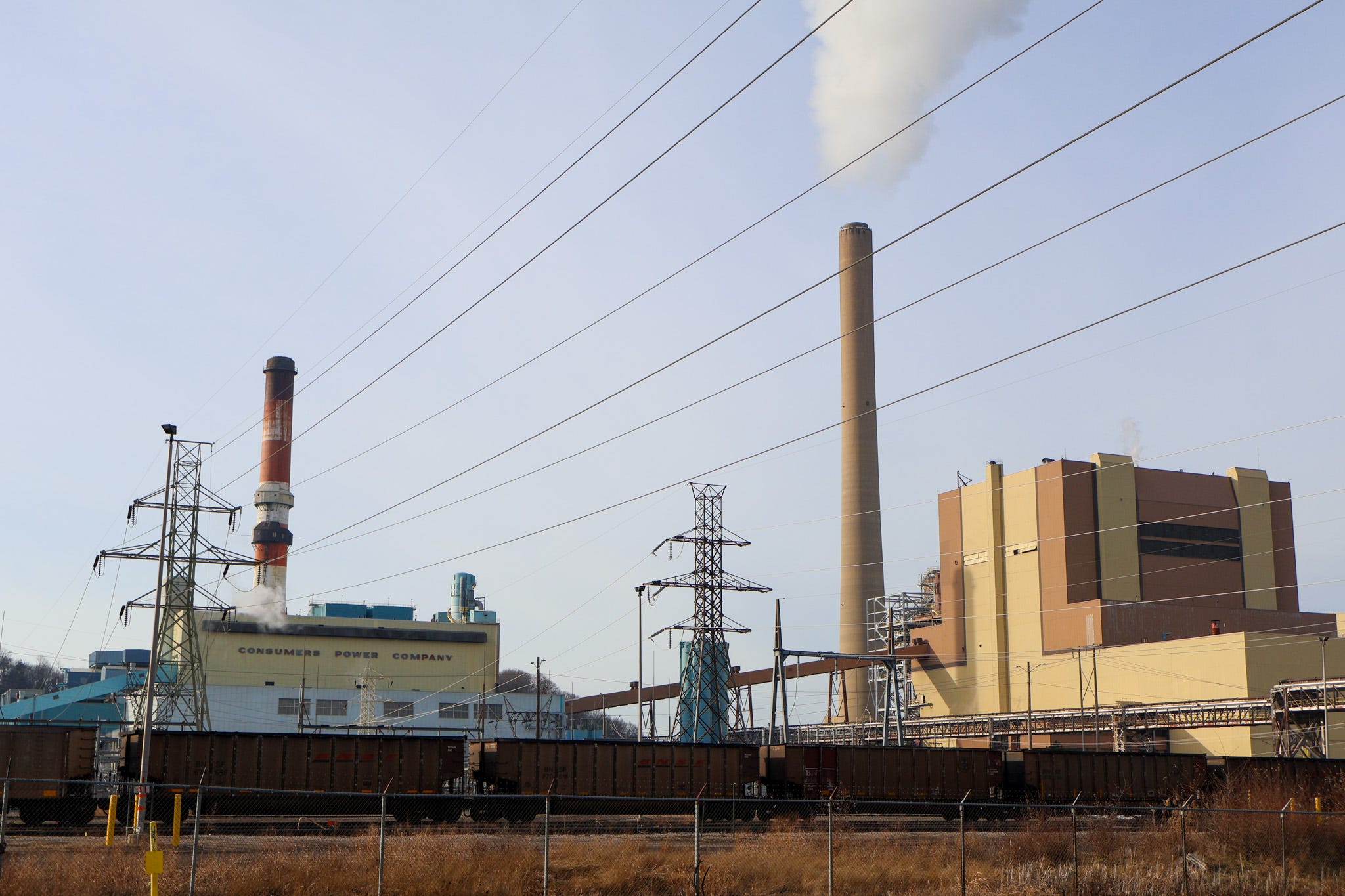
Michelle Bloodworth, the president of a lobbying group called America’s Power, sent a letter last spring detailing steps the U.S. Department of Energy could take to give the declining coal industry a hand in these tough economic times.
And “the Trump administration,” The New York Times reported this week, “has since taken each of those steps.”
Writing letters like this is what lobbyists do, of course. But what’s so unprecedented, as the Times shows, is that the requests of a few private citizens were turned almost summarily into public policy at everyone else’s expense. Ted Kelly, an expert in energy and law with Environmental Defense Fund, said, “The industry swung for the fences and got everything they asked for.”
This week:
The letter, the spirit
It’s no mystery why it’s been 13 years since the last coal-burning power plant was built in the U.S. (And that one, in Texas, is currently broken. So much for these plants being “essential to maintaining a reliable, affordable and resilient electricity supply,” as Bloodworth put it.) Coal simply no longer makes economic sense when there are so many other cheaper, cleaner sources of energy already generating electricity and waiting to connect to our grids. This year, for the first time, the U.S. produced more power with solar than coal.
So did the rest of the planet.
So why save coal? Why now? Bloodworth’s letter cites a “national energy emergency.” But, ruling in September that the Department of Energy’s order forcing a retiring coal plant in Michigan to stay open is illegal, a federal court wrote, “there is no emergency.”

Still, the order has cost customers in 11 Midwestern states more than $259 million and counting in unwanted operating costs. And the plant has spewed more than 140 tons of life-shortening soot, 1,000 tons of health-harming NOx and 2,000 tons of lung-searing sulfur dioxide that never had to be released into the air.
Similar orders citing similar grid “emergencies” have been made at coal plants in Colorado, Florida, Indiana and Washington, and the health and economic costs are piling up there, too. Or, as another member of the Trump administration told the coal industry, “Many of the items on your wish list have been done.”
Read more here.

Even more pain at the pump
The Times’ reporting makes clear that there’s been a consistent disconnect between what the Trump administration says it’s going to do and what it does.
President Trump campaigned on cutting electricity prices in half, for example, but these handouts to the coal industry have only introduced hundreds of millions of dollars of unnecessary operating expenses.
That’s not to mention that the administration has also rushed to obstruct the development of other sources of energy that would be saving people money on their electricity bills if it hadn’t.
You can see the same disconnect in the administration’s other big move this week, which was repealing fuel efficiency standards. Acting in the name of “affordability,” the administration decided to allow new cars and trucks to get fewer miles to the gallon. That will only end up forcing people to have to buy more gas — which has never been more expensive — much more often. The standards, in fact, would have saved 64 billion gallons of gas.
As it is, nearly half of all Americans say they are already driving less to try to save money, and they are buying fewer large trucks and SUVs.
Now, the repeal of the standards will add more costs on top of everything else — an average of $1,600 over the life of a vehicle, the National Highway Traffic Safety Administration estimated. “For decades, our national fuel economy standards have steadily made our vehicles more efficient and less expensive to drive,” Andy Su, a transportation attorney at Environmental Defense Fund, said. “Raising costs on Americans is exactly the opposite of what we need. These rules won’t just slam the brakes on progress – they’ll throw us in reverse.”
Today, a coalition of environmental organizations sued the Trump administration to stop the repeal. Read more here.
Stories from the States
California
During Climate Week, California Gov. Gavin Newsom announced that the state was preparing to add a third partner and link its successful program requiring life-saving cuts in heat-trapping, climate-altering pollution with Washington’s.
Known as “cap-and-invest,” the program puts a limit (or “cap”) on climate pollution and requires polluters to turn in allowances equivalent to that pollution. The allowances are auctioned off quarterly, and the revenue that’s generated is then invested back in local communities. Since 2012, California’s program has generated more than $36 billion. Washington’s newer program, launched in 2023, has generated more than $3 billion already.
A much larger market between the two states and existing partner Quebec will lead to greater pollution cuts regionally and raise even more revenue for governments to invest in everything from new electric school buses to tax rebates to wildfire protections, Fred Krupp, the president of Environmental Defense Fund, said. “By scaling up proven and efficient pollution-cutting programs, states can deliver savings for families and businesses, while making a huge impact on our national emissions,” he said. “More states should follow their lead.”
North Carolina
Duke Energy, the largest utility in North Carolina and one of the largest in the U.S., requested a permit to expand a massive power plant that burns natural gas in anticipation of a potential rise in electricity demand driven by data centers. The state’s utility commission refused.
It was the right decision, Will Scott, who directs policy in the state for Environmental Defense Fund, wrote. He explained:
“Building a new gas plant is essentially taking out a 30-year mortgage on our utility bills. If tech demand shifts or cleaner options take over down the road, everyday customers are left paying off the enormous cost of an expensive, polluting power plant — one that it turns out we never needed — for decades.”
What makes more sense than a costly new gas plant or ersatz system of dirty back-up generators, Scott added, is an approach deploying a mix of clean energy that’s proven successful in other parts of the country. “Under a setup like this,” he wrote, “tech companies cover the cost of their own energy footprint, local communities are spared smoke and noise and ratepayers are protected from footing the bill for bad investments.”