


NOTE: This is the first of a two-part series exploring the Trump administration’s “arbitrary and capricious” attacks on U.S. offshore wind. Part 2 goes live next Tuesday. — AW
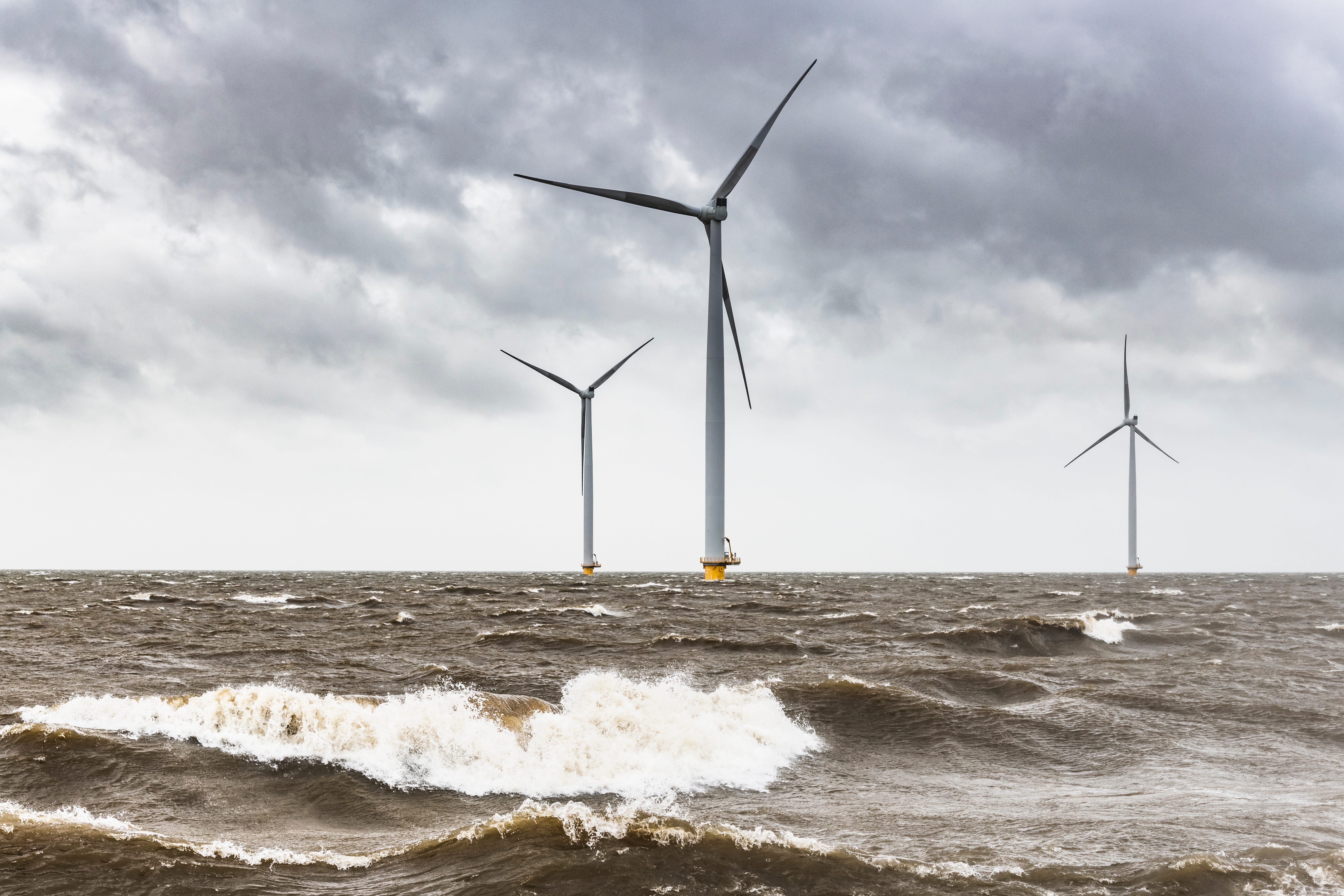
During this winter’s frequent cold snaps, as demand for electricity spiked with New Englanders staying home more and running their heat around the clock, a new wind farm off the coast of Martha’s Vineyard and Nantucket delivered so much reliable power it saved the region an estimated $2 million a day.
And it was still being built.
Despite this money-saving performance, Vineyard Wind 1 still became one of five under-construction wind projects off the Atlantic Coast that the Trump administration’s U.S. Department of the Interior ordered to stop work.
The DOI cited classified national-security concerns about the turbines interfering with military radar, even though those concerns had already been reviewed and cleared during the original permitting process. As the only project of the five that had begun sending power to the grid before the stop work order, Vineyard Wind was ultimately granted permission to keep current operations, but the delays created costly consequences all of New England will face for years to come.
Compounding on down
Six weeks after the orders, federal judges summarily reinstated all five projects through preliminary injunctions, each finding the same flaw: DOI’s order was a one-page directive with no reasoned explanation, and agencies overlooked the harm of freezing nearly finished construction.
According to court documents and the American Clean Power Association, delaying the last 5% of Vineyard Wind’s remaining construction cost an additional $2 million a day — nearly $72 million in all over the course of the 36-day freeze.
“It’s ironic,” the Green Energy Consumer Alliance’s executive director Larry Chretien said. “You’d hope the administration would act consistently with its stated goal of making energy more affordable.”
What’s more, over the next 10 years, customers along the Atlantic Coast could see an estimated $45 billion in additional costs from the delay of these five projects, according to the ACP.
Why? Savings from cheaper energy sources don’t hit bills right away, because most customers are locked into rates set months or years in advance. A turbine spinning today doesn’t lower this month’s bill.
Instead, Chretien said, it reshapes future contracts. Every megawatt of cheaper wind pushes the most expensive generator (like oil and gas plants, for example) out of the bidding, lowering the price paid that hour, creating a “price suppression effect” that shows up the next time a supplier sets a new rate.
So, a stop-work order doesn’t just raise costs on the days a project sits idle, it delays the point when the project will start suppressing prices. Missed savings today become more missed savings tomorrow.
That compounding delay hits New England especially hard. The region already leans on natural gas more than most — with limited land for solar and onshore wind and pipelines serving heating and electricity-generating needs in winter months — which is exactly why prices spike so volatilely during cold snaps. Offshore wind is the region’s clearest way out of that dependence. Delay it, and there’s no real backup plan close to its scale.
Whose wishes?
Campaigning in 2024, President Trump asked oil and gas executives to give $1 billion for a “policy wish list” he would grant once elected, the Brennan Center for Justice found. The industry became his top financial backers — at least $75 million was donated to his campaign and more than $25 million to his main super PAC.
Since then, whether it saves you money or not, the Trump administration has delivered billions of dollars in tax incentives for oil and gas while obstructing other sources of energy, including issuing an executive order withdrawing parts of the country for offshore wind leasing.

But increasing reliance on fossil fuels comes at the worst time, Chretien said. It will only leave customers more exposed to price shocks tied to global instability. “These projects are proving to not only help us reduce pollution but also strengthen our ability to meet peak demand and withstand climate change.”
Take South Fork Wind, off the coasts of New York and Rhode Island, for example. Online longer than Vineyard Wind and already at commercial scale, it’s the clearest proof offshore wind performs reliably year-round, he said.
It posted capacity factors — which is how well a wind farm is performing relative to how it would do in ideal conditions — higher than 80% on several January days, generated power on 99% of days and 90% of all hours in 2025, and hit a 75% capacity factor during this Fourth of July heat wave — topping 90% on July 2nd.
“The actions of the administration have affected the market broadly,” Chretien said. “Fewer developers are willing to try to build a project, and it’s unclear when the next one will move forward.”
Amisha Kumar, Environmental Defense Fund’s Healthy Communities communications intern this summer, is an MIT Science Writing master’s student whose work has appeared in The Baltimore Banner, Boston Business Journal and ProPublica, among others.

this is so cool! i learned so much