


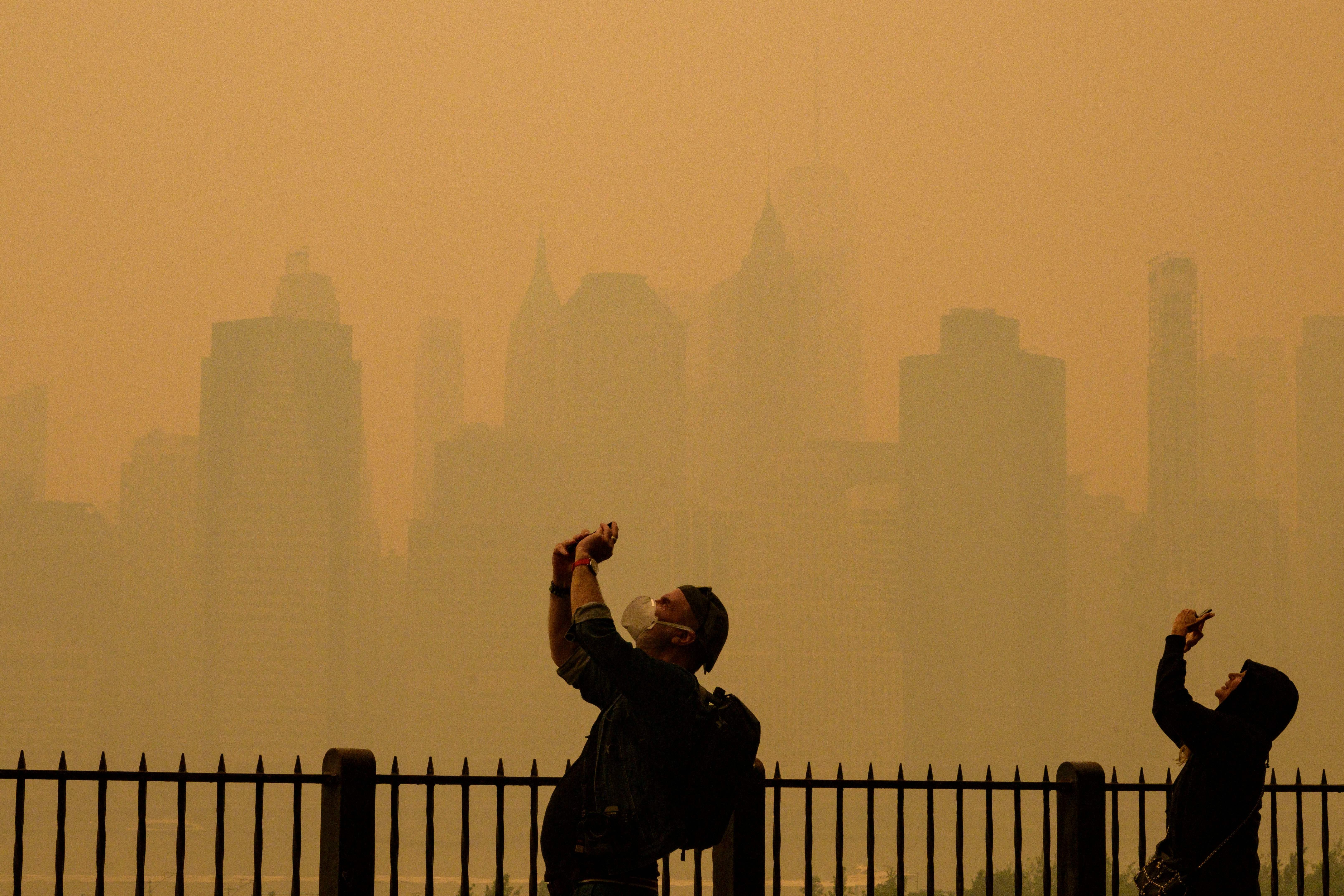
A THUNDERSTORM CLEARED THE AIR of wildfire smoke long enough for Sunday’s World Cup final between Spain and Argentina to kick off at the New York New Jersey Stadium as planned. But the Air Quality Index the day before reached 157, which is considered “unhealthy for everyone.”
Unhealthy, that is, to go outside. To breathe. To play a game.
Presumably, New York natives President Trump and U.S. Environmental Protection Agency Administrator Lee Zeldin noticed the smoky skies, but it’s unlikely either man studied the new report released just days before the final match that determined science is getting better and better at understanding how climate change is making extreme weather worse and worse.
The two men have spent the better part of this administration — with the $250 billion wildfires in Los Angeles still smoldering when they took office — downplaying climate change altogether, dismissing the dangers, deterring the solutions and driving up the costs we will have to incur.
But climate change, President Trump said, is “not our problem.”
After working to repeal the Endangerment Finding, the government’s fundamental legal and scientific determination that the pollution altering the climate is harming us, too, Administrator Zeldin went as far as delivering the keynote address at the annual conference of the Heartland Institute, a fringe organization that got its start using Big Tobacco money to argue that smoking might not be so bad for you.
Released Thursday, the new report from the National Academies of Sciences, Engineering and Medicine — formed by Congress to serve as the authority on these questions for the past 70 years — upholds the science that runs counter to the administration’s denials. It confirms that scientists are able to attribute with confidence precisely the ways climate change is worsening all kinds of extreme weather from hurricanes to heat waves.
It’s no longer a question of whether, the report makes clear, it’s a question of how much.
But the Trump administration isn’t asking, and it’s actively undercutting the solutions. Repealing the Endangerment Finding alone is expected to impose billions and billions of dollars in new fuel costs and health harms in the years to come. The U.S. has already spent more than $3 trillion on climate-related disasters since we started keeping track in 1980.
In Kalamazoo, Michigan, just two days before President Trump settled into the luxury box to watch Spain defeat Argentina, the state’s Attorney General Dana Nessel laid out the stakes. The Trump administration, she said, overrode years of planning to retire a money-losing coal plant whose decades of pollution fouled the air and water and contributed to the conditions that are making heat waves hotter, wildfires wilder and hurricanes more ferocious.
Attorney General Nessel’s no attribution scientist, but she made it clear who’s to blame for the darkening skies we’re living under.