


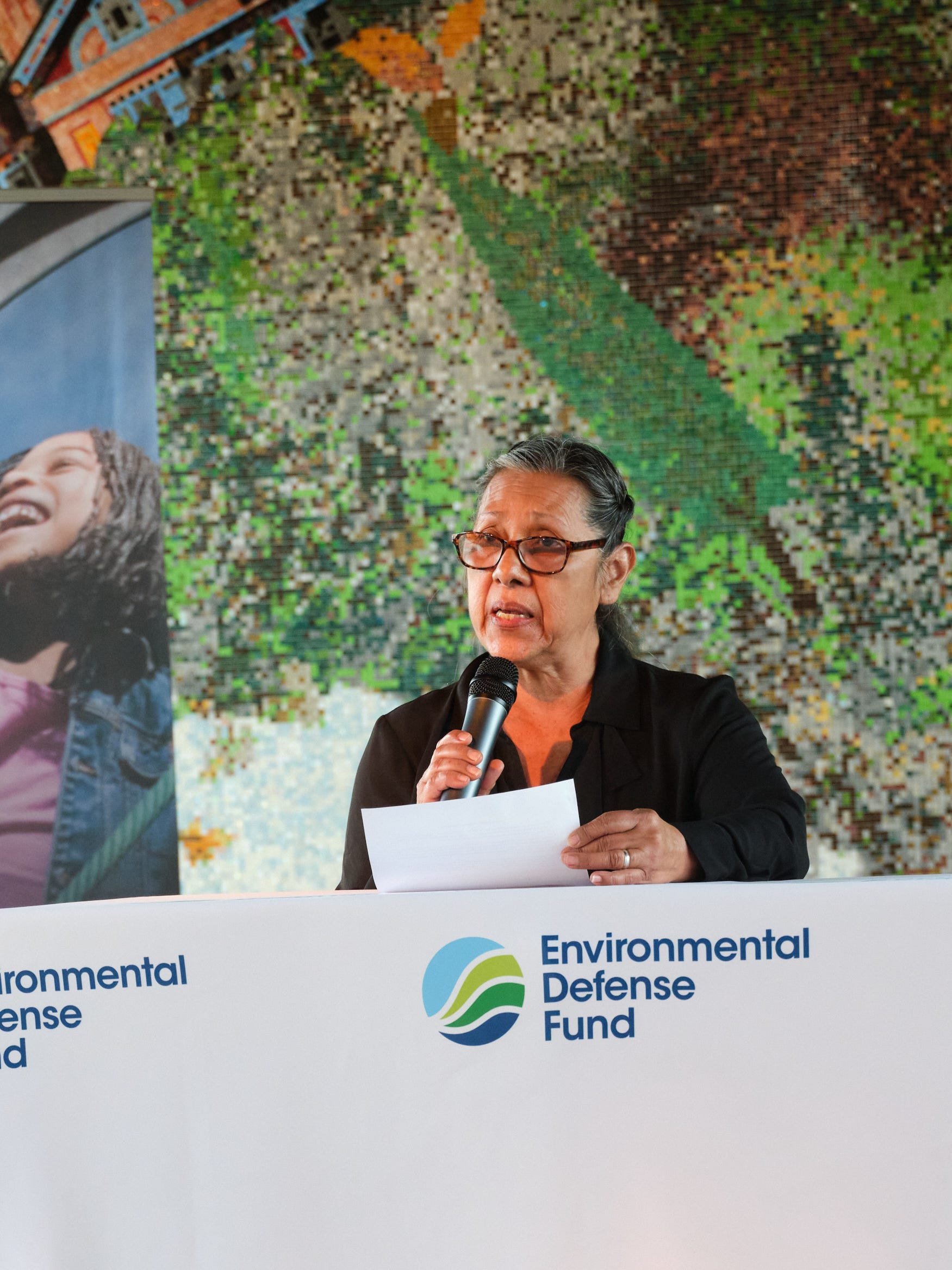
SO MANY OF LINDA ROBLES’ LOVED ONES have died from exposure to forever chemicals she’s started holding car washes to help raise money for the funerals.
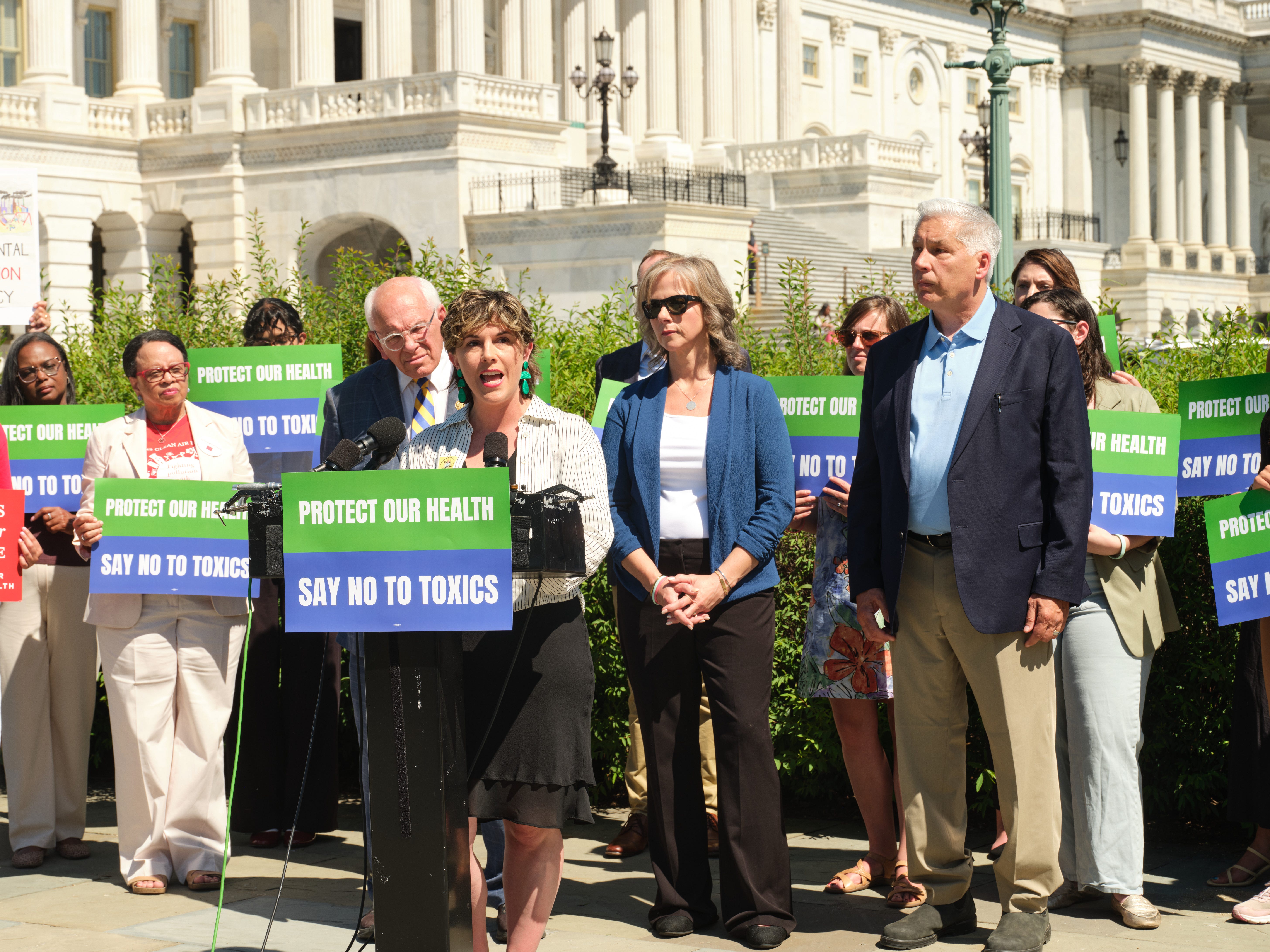
This week, Robles flew from her home in Tucson, Arizona, to Washington, D.C., to join a group of parents, veterans and advocates to make sure Congress doesn’t weaken a law that’s keeping it from happening to anyone else.
Ten years ago, a bipartisan agreement was reached to strengthen the Toxic Substances Control Act, or TSCA. (Say, “TOSS-kah.”) The earlier version of the law allowed new chemicals to be used in everyday products without requiring the U.S. Environmental Protection Agency to determine they were likely safe. But the chemical industry is pressuring Congress now to take us backward again and weaken TSCA to lowball the risks we face and tamper with protections put in place for children, people who are pregnant and who work and live around the facilities where these chemicals pose the most serious threats.
The risks are real.
In 2024, Jess Conard was living in East Palestine, Ohio, in what she calls her “dream home” with her husband and sons when one of Norfolk Southern’s trains derailed and its cars started leaking hazardous chemicals into the air, water and soil. Soon, dozens of emergency agencies descended on the scene. Fearing an explosion, officials decided to vent and burn off the vinyl chloride, which created an acrid plume of smoke that loomed for days. People who lived as far as 2 miles away were ordered to evacuate.
Now, for Conard, the clatter of trains that still roll through East Palestine has been replaced by the worrisome rattle in her sons’ chests when they’re trying to catch their breath.
She joined Robles this week, too, because she knows the last thing communities need is fewer protections in the face of chemicals that can change people’s lives forever. “We talk a lot about the health issues, the environmental issues, but we don’t talk about the displaced emotional geography,” she told The Work.
“I was married for 17 years, and now I’m divorced, estranged from many family members, and I live in a new home, a new city. My career changed. Nothing about my life has been the same. The phrase that resonates with me is that the train derailment was preventable. The vent and burn was not necessary, just like weakening TSCA is not necessary, and Congress can prevent it.”
In case you missed it, read last week’s edition.
Add to Your Tabs
Trump administration issues another illegal mandate to keep Orlando-area coal plant open past retirement | Environmental Defense Fund
Get ready for a smoky summer | Heatmap
Trump administration dismantles ambitious ocean monitoring program | PBS
Stories from the States
Ohio
A few hundred miles east of East Palestine, a plastics incinerator in Hebron, Ohio, was creating plumes of smoke of its own.
Last week, after ongoing environmental violations revealed persistent levels of a kind of air pollution that can lodge in the lungs and cause heart disease and cancer, the so-called “advanced recycling” facility notified the state environmental agency that it would be suspending operations.
“Children in the community will finally be able to play outside without the threat of breathing dirty, contaminated air,” Amanda Rowoldt, a community organizer for Moms Clean Air Force in Ohio, said. But the facility’s “record in Ohio should serve as a clear warning to communities like Eloy, Arizona, where the company is pursuing a giant plastics incinerator. These toxic enterprises are not a solution to the plastic pollution crisis. Freepoint’s decision to suspend operations must be final and permanent.”
Indiana
Another industrial facility is being forced to go the other way: A coal-burning power plant in Indiana that was no longer needed and scheduled to retire has now been twice ordered by the Department of Energy to stay open — even though it’s currently broken.
Though the plant hasn’t operated in months, the utility company that owns it is stuck between the “emergency” order and the $1 billion it’s going to cost to make extensive repairs to comply. Meanwhile, the grid the Trump administration insists will fail without coal plants is “well positioned to meet power demand this summer, in large part thanks to new wind, solar and batteries,” the utility itself told regional grid operators.
But then the administration’s entire approach to coal isn’t really adding up. Yesterday, after suggesting on social media that the dirty fossil fuel was living it up in some kind of debauched “Weekend at Bernie’s” situation with its own reality show …


… the Department of Energy said it was gifting $700 million more to the industry. Ted Kelly, an expert in clean energy at Environment Defense Fund, explained why it’s such a harmful idea:
“Pouring taxpayer dollars into dirty, unreliable coal plants that bleed money is a surefire way to drive up families’ electricity bills even higher. Utilities are retiring coal plants for a reason — to save money. At a time when we need more power on the grid, doubling down on one of the most expensive, polluting energy sources is the worst possible answer.”
New York
It’s a real paradox. Somehow, the U.S. finds itself in an energy “emergency” that’s so dire the Trump administration claims it has no choice but to spend hundreds of millions of dollars in taxpayer money to keep coal plants burning for months on end — but it’s not so pressing the administration can’t also spend hundreds of millions of dollars to pay other companies to not build new projects.
In March, after trying and failing in court to stop five offshore wind projects that were already under construction from being completed, the Trump administration paid a company $928 million to abandon two wind projects it was planning to build off the coasts of New York and North Carolina.
At the time, North Carolina Gov. Josh Stein called it “a terrible deal.”
Then, in April, the administration did it again, paying two other companies $885 million to abandon their wind projects off the coasts of California and New York and New Jersey.
Altogether, now, by my count, the Trump administration has paid nearly $2 billion to keep cheap, reliable power from at least 3.4 million homes and businesses.
This week, seven states sued the administration, arguing that the original deal in March is illegal. Letitia James, New York’s attorney general, said, “We are fighting back to stop this illegal agreement that threatens to erase over a thousand union jobs and cheat millions of New Yorkers out of clean, affordable energy.”
Excited to see EDF on substack, I've been writing about TSCA a lot on my publication (and worked extensively with your team back on TSCA reform campaign).