


LIKE TRUCK-STOP COFFEE beneath a sign that says “gourmet,” the Trump administration’s catchphrases often fail to pass the smell test. And maybe none’s further from the truth than “beautiful, clean coal.”
It’s neither. But the administration’s such an undisputed champion of the single-largest source of brain-damaging mercury pollution in the country it introduced a new cartoon mascot, Coalie. You know. For kids.
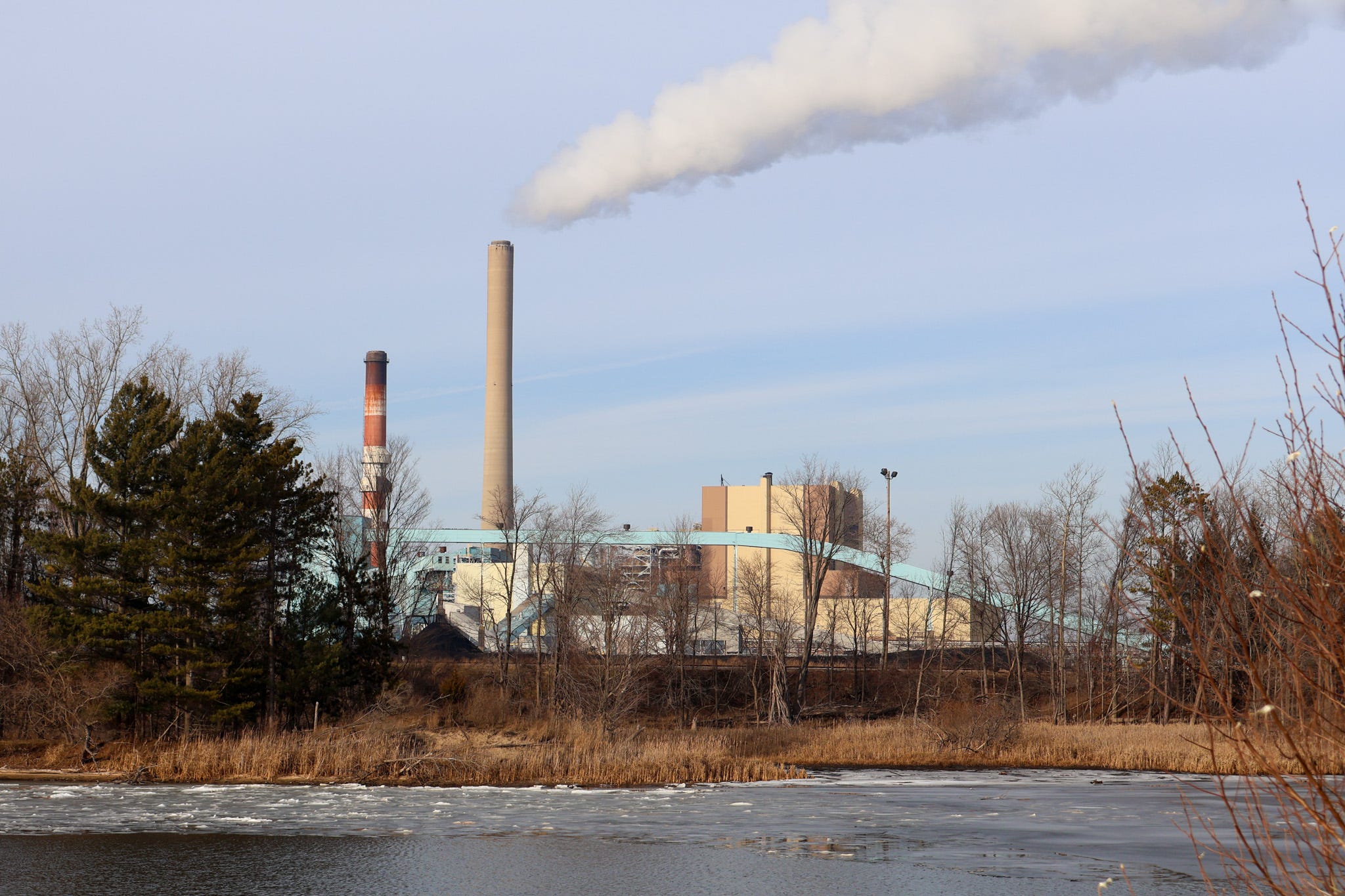
But the misleading insistence is leaving behind a heap of very serious costs — nowhere more apparent than in Michigan. The J.H. Campbell coal plant started operating three years before Bob Dylan ever went electric. The plant was one of the Great Lakes region’s most notorious polluters for decades. Because Campbell also cost more to run than it made selling electricity, the utility that owns it planned to retire it last May.
“The whole point was to save money,” the state attorney general said. Eight days before the retirement, though, Energy Secretary Chris Wright issued an illegal emergency order forcing Campbell to stay open — and then extended it. And extended it.
And extended it again. After nearly a year of this, the utility’s now staring at $180 million in costs, new financial filings show — costs being passed down to its customers in 11 states. “Families are getting double-billed to prop up a worn-out, polluting coal plant they don’t need and they can’t afford,” Ted Kelly, my colleague at Environmental Defense Fund, said.
Beautiful.
The Trump administration’s done the same thing at retiring coal plants in Colorado, Indiana and Washington for the same flimsy reasons. We can’t have a reliable grid without coal, the administration keeps saying, but that’s not true, either. In Washington, there’s so much power available the plant’s barely been needed. Keeping it running anyway has cost $20 million and counting.
Now, three states and a coalition of public interest groups including EDF are challenging the legality of the order in Michigan and will be in court in Washington, D.C., next week. We’ll keep updating the story here.
‘They’re going to sit empty’
These costs are being imposed on working families at a time when thousands of jobs and billions of dollars in investments are disappearing, too. Not incidentally, only 34% of voters approve of the way President Trump is handling the economy, a Fox News poll shows.
The administration has slowed down the clean energy industry in particular — one that had been enjoying real growth since 2021 at least. In 2026, instead, the U.S. has now lost 5,600 clean energy jobs and seen $1.4 billion in planned investments cancelled, according to a new report from Atlas Public Policy and my colleagues at EDF.
These losses come after a lousy 2025, too, which saw 39,000 clean energy jobs and more than $29 billion in investments cancelled amid the most “anemic” job growth since the pandemic. In December, for example, a new Ford factory in Kentucky that was nearly ready to start building batteries for a line of electric trucks abruptly laid off 1,600 workers.
But the Trump administration’s apparently arbitrary hostility to some kinds of cars and some sources of electricity but not others is costing communities in all kinds of ways. The factory’s original construction drove hundreds of millions of dollars in much-needed investment in one of the poorest states in the country. Bridges and ramps were rebuilt, freeways reconfigured. New transmission lines went up. Water and sewer systems were modernized. In anticipation of the population growth the factory was expected to bring, 3,000 new apartments and homes were also built. Now, one laid-off worker said, they’re “going to sit empty.”
Add to Your Tabs
Trump’s disdain for wind power creates political turbulence for Republicans in coastal Virginia | Associated Press
Trump is getting away with murdering an American industry | Heatmap
New EPA directive could weaken hundreds of chemical regulations | ProPublica
Stories from the States
Arizona
Arizona can’t seem to stop breaking records for extreme heat. There are entire summers now when the temperature simmers above 100 degrees. The electricity grid is “already under enormous pressure,” Kevin Moran, my colleague in Arizona, writes. The state’s population is growing rapidly. Data centers are multiplying. Demand for electricity could increase by almost half again in the years to come.
But the good news is that the state has “world-class solar and wind resources,” he writes, with at least 300 days of sunshine every year. State leaders have agreed it’s time to embrace the abundance and fortify the grid with clean energy, Moran writes.
The benefits go way beyond keeping the HVACs on:
“In addition to powering our homes and economy, clean energy is a powerful engine for jobs and investment. Today, more than 64,000 Arizonans work in the clean energy industry, more than half of all energy jobs statewide. For many communities, especially in rural areas, clean energy projects bring new tax revenue that helps fund schools, roads and emergency services. They also create new opportunities for farmers and landowners, who can lease part of their land for wind and solar projects, providing a reliable, drought-proof source of income. It only makes sense to unleash the opportunities that the new clean energy economy brings, not stifle them in red tape.”
A new electricity market that connects western states — which is detailed here — could end up saving the state $100 million more every year, too, allowing grid operators to plan ahead of heat waves and other extreme weather and get affordable power where it’s needed most.
Idaho
The Farm Bill that was passed through the House of Representatives at the end of April “fails to meet the moment,” EDF’s Joanna Slaney said. As the bill moves to the Senate for deliberation, one fourth-generation farmer in Idaho laid out the stakes for the agricultural industry at large. “The U.S. lost 15,000 farms in 2025,” she writes in a new essay for Agri-Pulse. “USDA predicts that farmers will spend more than they will make from growing crops and raising livestock in 2026. As the mother of a 5-year-old, I ask myself: What kid has the American dream of taking on a mountain of debt to run a business that is likely to lose money?” What’s left out of this Farm Bill — with cuts to conservation programs to a lack of investment in research in soil health to unaddressed staff shortages at USDA who can make it all work — is what she identifies as must-haves for families like hers to thrive. That part of Idaho ranks in the 99th percentile for vulnerability to wildfires, the U.S. Climate Vulnerability Index shows. Record-low snowpack in the west after an unusually warm winter will only put more pressure on water systems that have never been more strained. For 100 years, her farm has been in Lapwai. But climate change is changing things, and we need a Farm Bill that’s up to the challenge.