


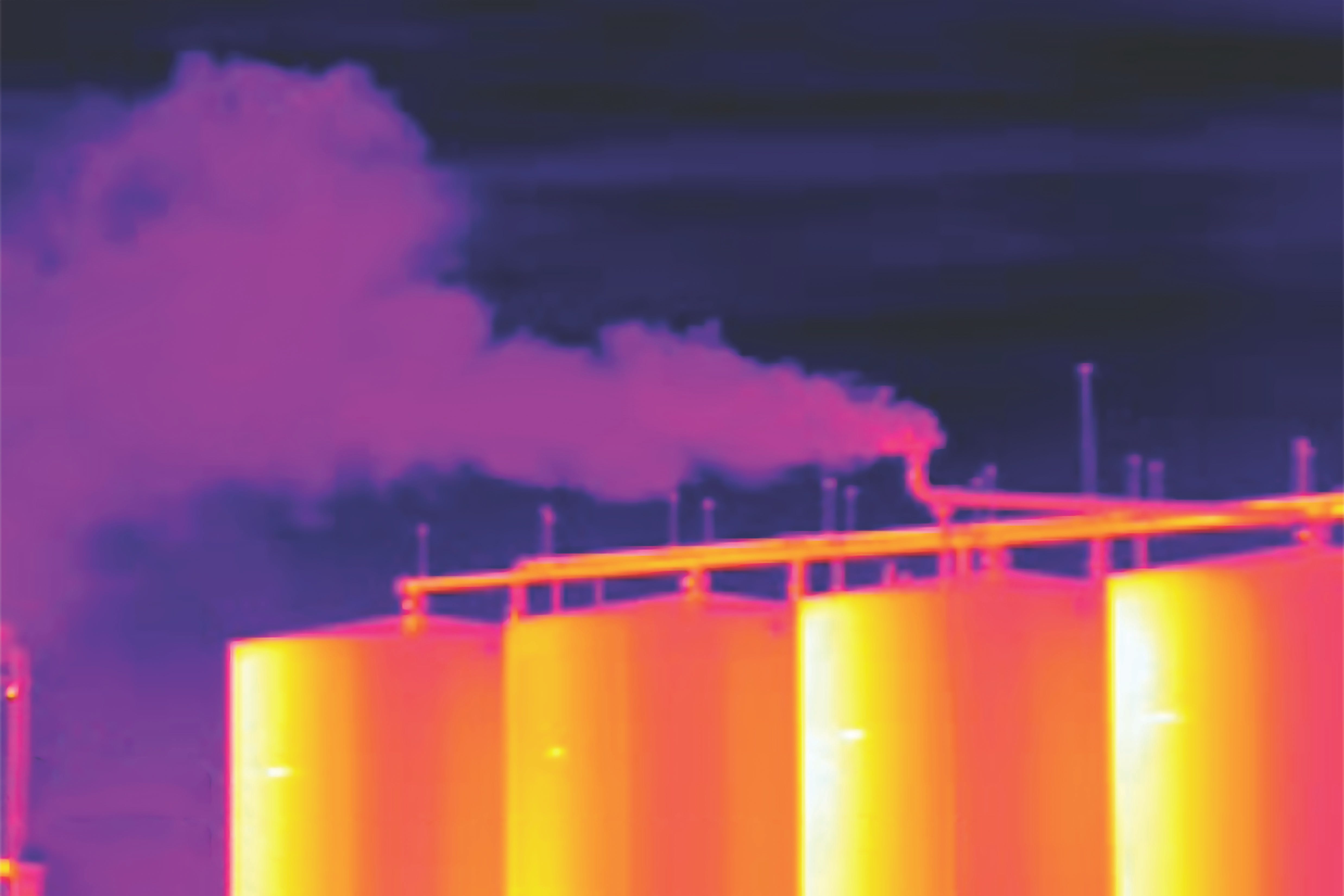
PRESIDENT TRUMP HAS NEVER BEEN all that principled when it comes to sticking to a budget. As costs for the brand-new ballroom and the war mount and families across the country cancel camps and skip road trips because gas is too much, the Trump administration is allowing billions of dollars — and counting — to vanish into thin air.
For years, enough methane, which is the primary component of natural gas, to power millions of homes leaked and otherwise escaped from pipelines and oil and gas equipment into the atmosphere, where it doubles as potent climate pollution. Why let it go to waste? “Sensible methane standards protect our energy supply and contribute to climate security,” Jon Goldstein, my colleague at Environmental Defense Fund, said recently.
In fact, more gas is lost and flared around the world than made it through the Strait of Hormuz last year, Fred Krupp, the president of Environmental Defense Fund, wrote in The Wall Street Journal. “The high cost of energy is acting as a stealth tax,” he said, but “the solutions are straightforward.”
“As consumers around the world tighten their belts, oil and gas companies should tighten valves, close hatches, replace worn and faulty equipment, ensure equipment is well maintained, end routine flaring, and track emissions to know how much gas is escaping from where. Companies must pursue rigorous emissions measurement and credible mitigation plans that treat gas waste as lost revenue.”
The U.S. had in place such sensible standards that were incentivizing oil and gas companies to prevent methane waste, but the Trump administration threw them out. Since then, $5.2 billion worth of gas that companies could be selling and people could be using is drifting pointlessly into the atmosphere.
Not incidentally, the president’s approval rating is going in the opposite direction. New polling shows that 64% of registered voters disapprove of the way he’s handling the economy, and 69% disapprove of the way he’s handling the cost of living. His overall approval rating has never been lower. You can’t see methane, of course, but as the midterms get closer, the evidence that voters want much more than what they’re getting is impossible to miss.
Thirst trap
It’s never struck me as a particularly coherent approach to public health for the Trump administration to zero in on artificial food dyes while quietly inviting hundreds of industrial facilities to pollute the air with mercury and formaldehyde and benzene. Anyway, it didn’t get much clearer this week.
Claiming a commitment to “gold-standard science,” U.S. Environmental Protection Agency Administrator Lee Zeldin announced his agency was proposing to drop limits for four different “forever chemicals,” or PFAS, that were on track to improve the drinking water of 100 million Americans and prevent tens of thousands of serious illnesses, The New Lede reported.
Administrator Zeldin blamed the previous administration for failing to provide enough time for public comment when first setting the limits. One would imagine, based on polling that shows more than 92% of voters believe that protecting safe drinking water and clean air should be public health priorities, the comments wouldn’t have revealed a thirst for even more risk. “PFAS are highly toxic, even at very low levels, and are linked to liver damage, cancers and other health problems for children and pregnant women,” Maria Doa, a former EPA scientist and one of my colleagues at EDF, said in a statement. “There’s nothing gold-standard about tearing down the science-based protections that help keep our drinking water safe.”
Add to Your Tabs
EV fans fear new fee from Congress will drive off gas-weary buyers | USA Today
Virginia steps right up to the Regional Greenhouse Gas Initiative roller coaster | POLITICO
Stories from the States
Michigan
Just a few days after a federal court heard arguments that the emergency order forcing a retiring coal-burning power plant in Michigan to stay open is illegal, the Trump administration extended it again.
Speaking of waste, the saga stretches to 2021, when “Michigan, the utility and the grid operator agreed on a plan to replace the plant with cheaper, cleaner and more reliable energy sources — a plan that would lower electricity costs at a time when families are feeling the strain,” Ted Kelly, my colleague at Environmental Defense Fund, said. “Instead, the Department of Energy is throwing all those years of state and local planning out the window, forcing people to pay the price of costly coal power indefinitely.”
The price people have been forced to pay so far is $180 million — about $600,000 every day since last May — for the utility to keep the plant running. (At the same time, the Trump administration has issued similarly costly orders at retiring coal plants in three other states.) The latest extension in Michigan pushes the old plant’s streak to 444 days, just in time for more of the same high temperatures that tripped two of its units “completely offline” last summer.
Texas
The market continues to make very different decisions from the Trump administration about coal. I’ll let Canary Media’s Julian Spector explain what’s happening in Texas, for example: “For the first time ever, solar is set to generate more electricity than coal. Nobody is building new coal power plants in the state, but developers are adding more solar there than anywhere else in the country.”
In fact, the state’s newest coal plant has been broken since last April and isn’t expected to start running again — if it’s even needed — until 2027. Coal, as it turns out, is expensive, a reality no cartoon mascot can change.
Nationally, according to third-party research, clean energy like wind and solar passed coal in 2024. This year, for the first time in history, clean energy passed coal worldwide. That milestone happened the same day Energy Secretary Chris Wright said this. He’s coal’s last ride-or-die, I guess.