
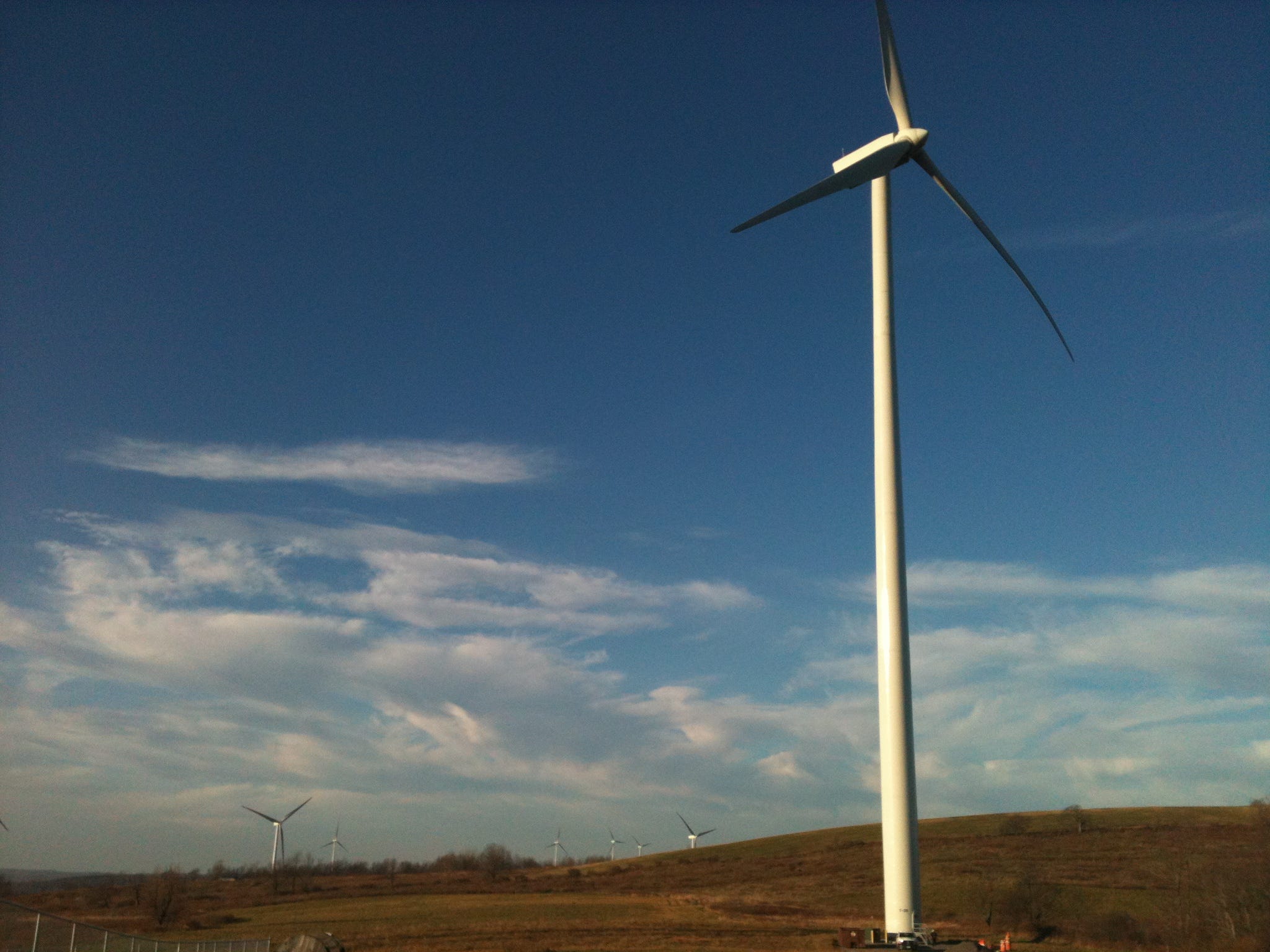
It’s clear that there are some kinds of energy — and this is putting it kindly — that the Trump administration disfavors. The president might think “the wind is bullshit,” and the energy secretary might temporarily forget that battery storage exists for those times each day when the sun stops shining, but they’re already powering millions of homes and businesses and saving people serious money.
Only two states get more of their energy supply from wind than Oklahoma, for example. Wind accounts for 42% of its total. Oklahoma produces so much wind it’s able to sell most of it off to other states, and the landowners on whose property the turbines spin earn almost $100 million together every year. It’s no wonder why Oklahoma Gov. Kevin Stitt criticized the Trump administration, saying, “You cannot weaponize these things and just for political purposes put your thumb on the scale.”
But that’s largely what the Trump administration has been doing. Though demand has never been higher, the administration has consistently acted to throttle the country’s supply and obstruct the development of more energy. And making less of something, any economist can tell you, makes it more expensive.
Now, we’re starting to have an idea of the costs.
As much as $6,500 in avoidable electricity expenses for the average American family have been locked in over the next decade and a half, The Associated Press reported this week.
Electricity costs have already gone up in 47 states, and some people’s bills have never been higher. Now, costs are expected to rise further in every single state. Job losses will hit 47 states. The GDP will decline in 46. The country will also see as many as 37,000 extra premature deaths from air pollution and $72 billion in added health care costs, Energy Innovation’s analysis found.
Because of the Trump administration’s policies, one analyst concluded, “the affordability crisis will be worse.”
Stories from the States
Michigan
One of those policies has been a rash of illegal emergency orders issued by the Department of Energy to keep retiring coal plants from being able to close as planned, often against the wishes of the plant owners themselves.
Built in the early 1960s, the J.H. Campbell plant in western Michigan is the one that has been forced to stay open the longest, and it’s racked up $259 million in operating costs in the meantime, even though its generating capacity had already been replaced by cheaper sources on the grid. Those costs, it’s worth typing here again, are now being passed down to customers in 11 states to pay.
Local and state leaders planned to shutter it for a reason. “The whole point,” Attorney General Dana Nessel said, “was to save money.”
But new reporting from POLITICO suggests that keeping the plant open might have consequences during the midterm elections. The plant is sited in a district that’s been represented by a Republican for 90 years, but Rep. Bill Huizenga is now “taking heat” for the Trump administration’s losing energy policies, as new polling shows that Michiganders are primarily concerned with the cost of living.
“Campbell,” POLITICO reports, “is a concrete example that Trump’s policies are why life is getting more expensive.”
Missouri
Another coal plant — the largest in Missouri — might be a concrete example that the Trump administration’s policies are why life is getting less healthy.
First, some context. In 2024, the EPA strengthened protections that limit the amount of brain-damaging mercury and other harmful air pollutants released from coal plants. The protections, which us nerds call the Mercury and Air Toxics Standards, had saved hundreds of thousands of lives since first being implemented in 2012 — but then the Trump administration took office and started inviting industrial facilities all over the country to ask for presidential “exemptions” from MATS and other clean air laws.
All the companies had to do was send an email.
Now, along with 200 other copper smelters and medical sterilizers everywhere from Houston to Phoenix, the coal plant in Labadie will be allowed to continue fouling the air.
Search our map to see the 500+ industrial facilities across the country
that have requested and been given these “presidential exemptions.”
Only four power plants in the country release more mercury than this one, and mercury can cause all kinds of health problems, especially for kids, whose developing brains and bodies can be harmed permanently. Mercury can even cross the placenta, harming the fetus before it’s ever taken a breath.
One Labadie resident has seen the pollution return, as though she’s now living in a bizarro sequel to “WALL-E.” Some days, she can smell it. “We feel like we’re being sacrificed,” she told Missouri public radio. “We’re being sacrificed for profits.”
Ohio
Over the last five brutally hot summers, the average electricity bill in Ohio has increased by 53%. This summer, the hottest ever recorded, the high costs also contributed to an increase in the number of electricity shutoffs, Canary Media reported, writing, “More and more Ohioans are struggling to pay their utility bills.”
At the same time, as the Trump administration has continued to falsely vilify cheap wind and solar power and attacked tax incentives for more clean energy and manufacturing, the state has lost economic momentum, seeing the cancellation of $1.3 billion in investment and the loss of more than 7,000 jobs.
It’s a bad time for the bills to be going up, that’s to say. This week, my colleague at Environmental Defense Fund, Elaine Labalme, traveled to the state capitol. She reports:
“I’ve spent the last several days talking to folks in different neighborhoods, everywhere from Hilltop in southwest Columbus and leafy Dublin to the north. But I keep hearing the same thing: People know how much their electricity bill is. They know how much it’s gone up. They’re not happy about it, and they’re worried about how much higher it’ll go this winter. They’ve made it clear that they can’t keep going on like this.”