


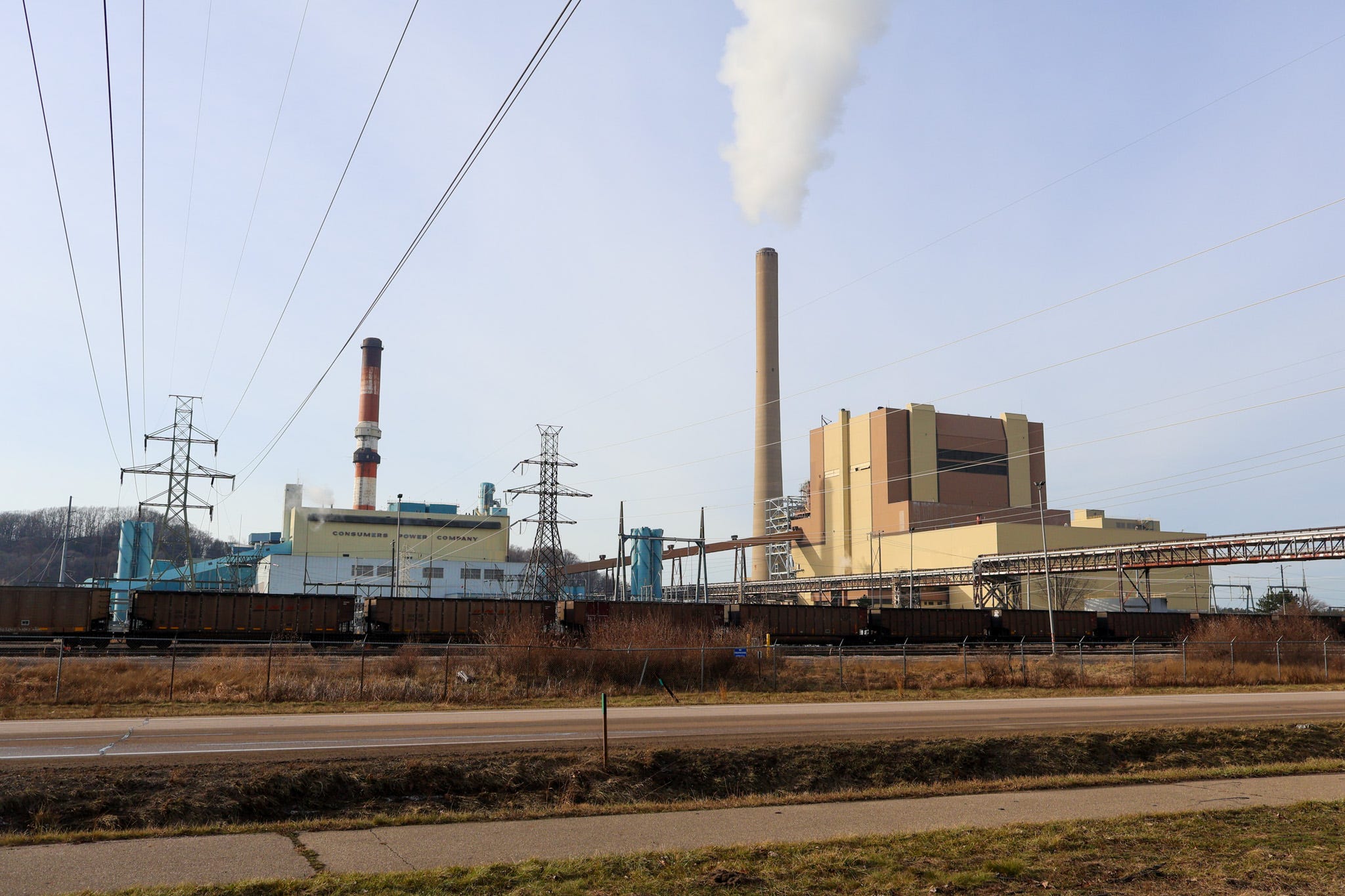
It takes years to retire a coal plant. The utilities that own them work closely with electricity grid operators and state regulators to consider supply, economics, compliance with environmental laws and many other complicated factors.
But the reasons why coal plants are being retired are a lot simpler. They’re expensive. They’re unreliable. They pollute heavy metals into the air, making it more dangerous to breathe. More affordable and much cleaner options are waiting to be connected to the grid.
That’s why, over the last two decades, utilities have made carefully calculated decisions to retire hundreds of older coal plants across the country. It’s why the U.S. hasn’t built a new one since 2013, either.
But the Trump administration has effectively torn up all the deliberate planning that went into these decisions, taking suggestions from the head of a coal trade group and turning them into public policy. Of course, this is the same administration that assured a roomful of coal and mining companies, “Many of the items that were on your wish list are now done.” As requested, the administration ordered half a dozen coal plants to stay open past their retirement dates and propped up the larger industry through direct cash payments and exemptions from complying with clean air laws.
While millions of Americans are struggling to afford electricity, nearly half the grid-connected coal plants in the country have been given special treatment. What’s the damage? A new tool from Environmental Defense Fund shows it clearly.
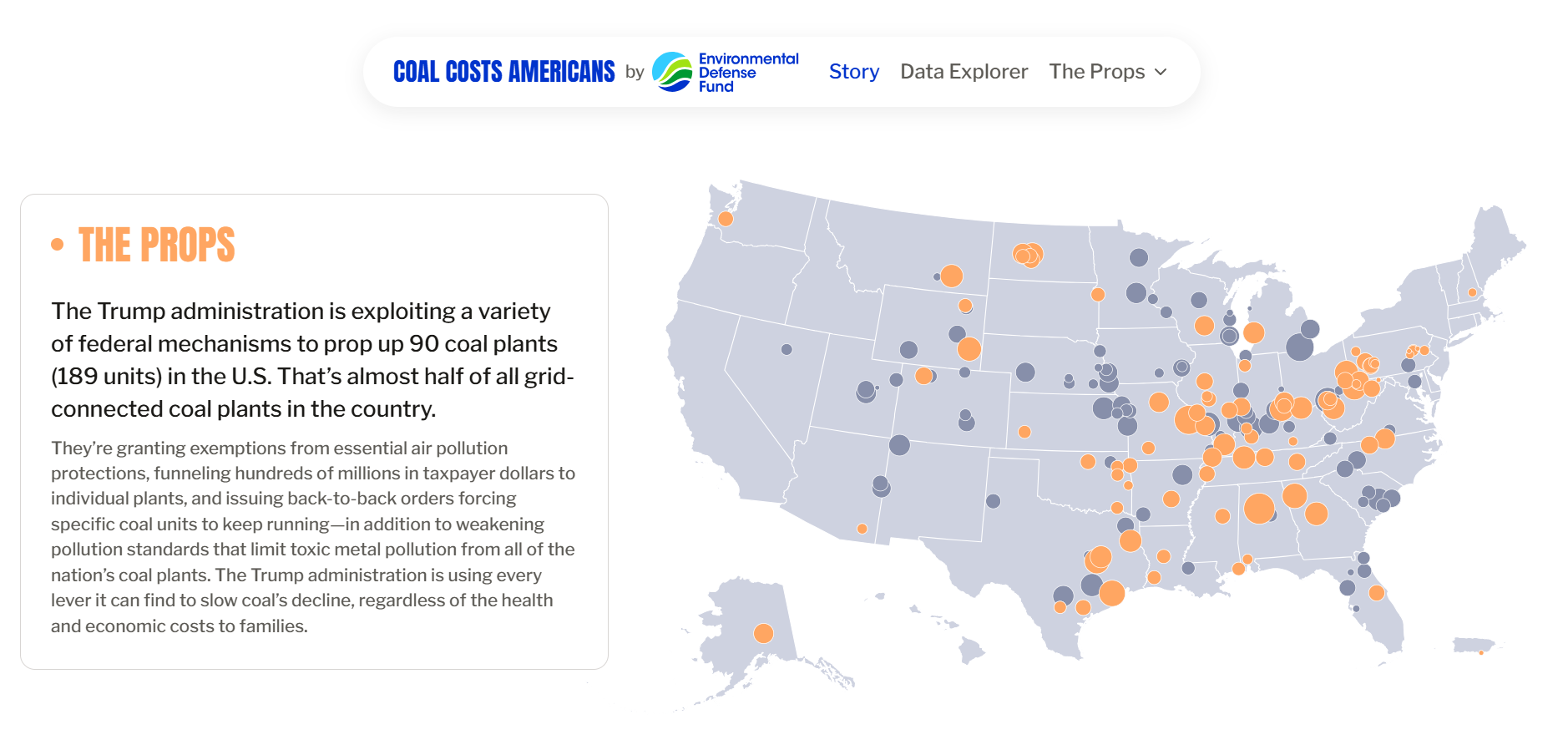
To date, the Trump administration has committed $950 million in taxpayer dollars to keep 24 individual coal plants chugging along. As a result, ratepayers have shouldered an additional $593 million in costs, and families will take on as much as $860 million in new health damages from the rash of mandates forcing plants to stay open. (Whether they’re actually producing any electricity is another story.)
The math just doesn’t add up for Americans whose budgets are stretched to the breaking point. That’s almost a billion dollars that could have gone toward things that would lower bills, like expanding access to clean energy. Coal is only getting more expensive: it cost 28% more to generate power from coal in 2024 than it did in 2021. There are plenty of cleaner, less expensive sources of energy generating power right now, but the Trump administration’s extended lifeline for coal remains one of the biggest roadblocks preventing them from coming online. Why is the Trump administration propping up yesterday’s energy source at our expense? Explore the tool here.
Lower standards
Flinging a stack of red hats like frisbees at a company picnic, President Trump stood up in an oil and gas-producing state where a majority of people support strong methane protections to announce he would be tossing out the strongest ones implemented to date.

In Lubbock, Texas, after delaying enforcing them for 18 months, President Trump said he was “terminating” relatively new federal standards for methane, which is the primary component in natural gas, that had been developed over the years with buy-in from oil and gas producers to incentivize less waste.
As usual, President Trump claimed the move would save money, but people in Texas and the other large oil and gas-producing states know better. Since the administration stopped enforcing methane protections, oil and gas operations have wasted more than $7 billion worth of gas so far. It’s why in California, Colorado, New Mexico, Pennsylvania and Texas, 72% of respondents support their state adopting strong standards to cut methane, new polling shows. As Fred Krupp, the president of Environmental Defense Fund, said, “EPA should be fighting this waste, not making it easier.”
Why? Because the waste burns us twice.
Allowing it to escape into the atmosphere from pipelines and other oil and gas operations means it can’t be used to power people’s homes and businesses. Then, once it’s in the atmosphere, it traps heat, changing the climate, intensifying extreme weather and driving up electricity bills, home insurance premiums and health care costs in turn.
Since January 2025, there have been 44 billion-dollar climate disasters, according to Climate Central. They’ve killed 477 people. And they’ve cost $169 billion. But the federal government’s fundamental determination — the Endangerment Finding — that climate change threatens people’s health and safety? The Trump administration’s tried to throw that out, too.
A gas turbine-sized loophole
After also tossing out the last remaining limits on carbon pollution from power plants — a move that will shorten 84,000 lives and cause $3 trillion in damages over the next 20 years, Environmental Defense Fund found — the Trump administration is expected to take one more step to allow more pollution into people’s lives.
For decades, trailer-mounted gas turbines — like the ones data centers are increasingly clustering together and relying on for power — have been treated like the industrial pollution sources they are, requiring permits and being subject to enforceable pollution limits. These temporary flocks of turbines can produce as much pollution as a power plant, including smog-forming NOx, asthma-triggering soot and cancer-causing formaldehyde.
But Trump’s EPA now appears ready to act as though they don’t, so they can be exempt from certain Clean Air Act protections and permits. It’s a bit like a toddler deconstructing his dinner, declaring “All done!” and expecting you to believe it’s not the same amount of food he started with. Not so fast, big guy.
Classifying these combustion turbines as “mobile” sources would strip communities of Clean Air Act-mandated opportunities for public comment and would fast-track approvals without any review of how the additional pollution would affect air quality. If this sounds familiar, it could be because EPA has already proposed eliminating public participation requirements for air pollution permits often used for data centers. “Across the county, people are being left in the dark with no notice of new data centers moving into their communities — and no avenue for raising concerns” about the pollution these facilities bring with them, Surbhi Sarang, a clean air attorney with Environmental Defense Fund, said.
Postcard from Michigan
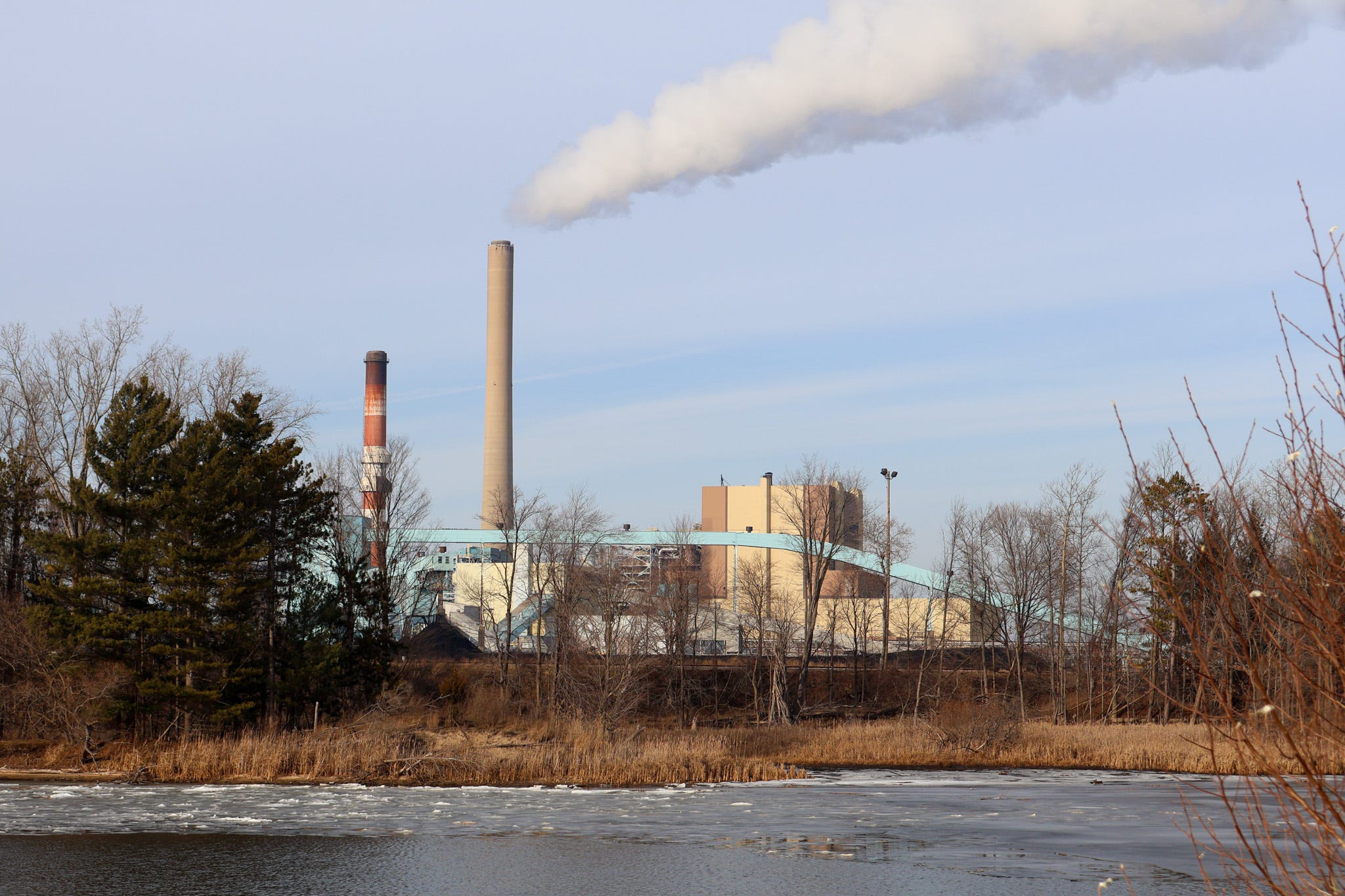
Each year, millions of tourists flock to western Michigan for the small-town charm and pristine beaches. I grew up swimming and climbing the dunes here. But one coal plant has been spoiling Lake Michigan’s famously “unsalted” shores my entire life. And it’s one the Trump administration still ordered to stay open, anyway. Built in the early 1960s, the J.H. Campbell plant was scheduled to retire in May 2025, but it’s been forced to run in fits and starts ever since. More than fouling sunset views, though, the plant pumps out millions of pounds of dangerous air pollutants that billow across the state and dumps more than 10,000 pounds of toxic metals annually directly into the lake. As Consumers Energy jacks up its rates to recoup the $300 million it’s losing keeping the old thing running, Michiganders and families across the Midwest are on the hook for about $615,000 every day in return.
— Anna Haynes, senior communications specialist at Environmental Defense Fund